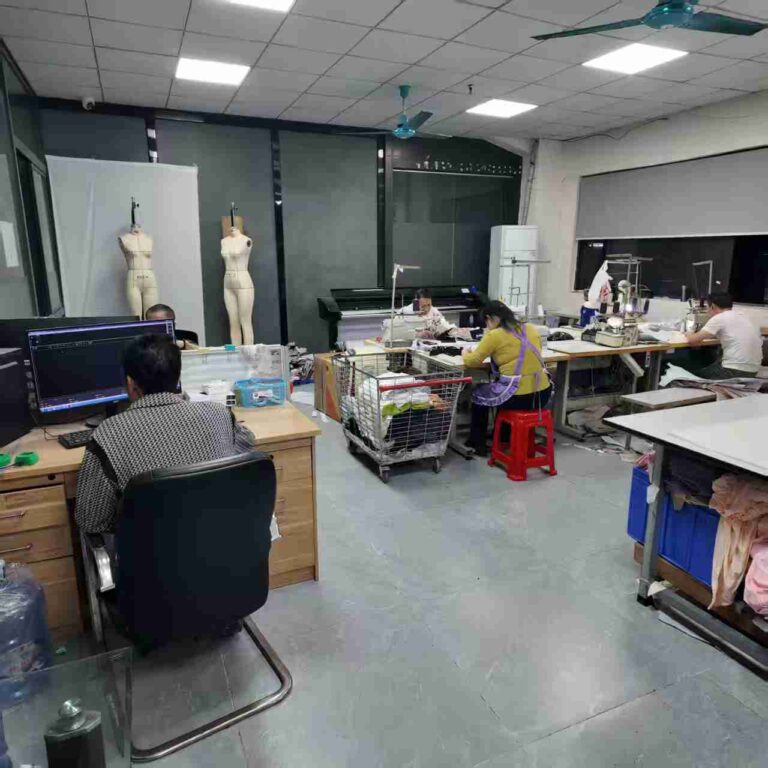

Darmax at a glance
| Minimum order | From 30 pieces per style |
| Sampling | 7 to 10 days |
| Bulk production | 20 to 30 days |
| Factory certification | SGS certified |
| Certified fabrics | GRS, GOTS, OEKO-TEX available |
Ask these twelve questions before you pay any deposit. The value is not in the answers alone, it is in how clearly and how specifically the factory answers them. A real factory knows its own numbers. A middleman repeats marketing language.
Every question below is one we are happy to answer ourselves, and we have noted what a weak answer sounds like so you can apply the same test to us.
Why most factory vetting fails
Buyers usually vet on price, sample quality and website polish. None of those distinguish a manufacturer from a reseller, and none of them predict what happens during a bulk run.
The supplier who quotes impossibly low usually wins the first order and loses the relationship on the second. The vetting that matters is operational: who has capacity, who controls their own production, and who will still answer your messages after the deposit clears.
The capability questions
1. Who physically sews the garments?
A real factory answers with its own facility and location. A trading company describes a partner. Ask for a live video walkthrough during working hours, not a pre recorded factory tour.
2. What is your monthly capacity, and how much of it is committed?
Capacity tells you whether your order fits. A factory that cannot state its monthly output in pieces does not track production. Weak answer: “a lot” or “no problem”.
3. Which processes are in house and which are subcontracted?
Printing, embroidery, washing and finishing are often outsourced. That is normal, but you need to know, because subcontracted steps are where delays and quality variance appear. Ask who the subcontractor is and whether they are audited.
4. How many of your own quality inspectors do you employ?
An in house QC team is a strong signal. We employ 30 across a four stage process. If a factory outsources all inspection to a third party, ask which one and what standard they apply.
The quality questions
5. What inspection standard do you work to?
Look for a specific answer such as AQL 2.5 for major defects, which is the level defined under the ISO 2859-1 acceptance sampling standard. Weak answer: “we check everything carefully.”
6. At which stages do you inspect, and can I see a recent report?
A four stage process covering incoming fabric, in line sewing, final inspection and pre shipment is a reasonable standard. Ask to see an actual report with a batch number.
7. What happens when a defect is found after shipment?
The answer reveals whether they stand behind their work. Ask about their remediation policy in writing, before you order, not after a problem appears.
8. Can you show me fabric test reports?
Shrinkage, colour fastness, GSM and pilling matter more on a bulk order than on a sample. Factories working with certified fabrics such as GRS, GOTS or OEKO-TEX stock should be able to produce the corresponding certificates.
The commercial questions
9. What exactly does your MOQ refer to, and what is the surcharge below it?
Confirm whether the minimum is per style, per colour, or per order. These three answers can differ by a factor of ten in total units.
10. What is the payment schedule, and what triggers each payment?
A typical structure ties payments to milestones you can verify: a deposit to start, a balance against inspection or shipping documents. Be cautious of requests for full payment up front, and cautious of unusually generous terms, which sometimes signal a cash flow problem.
11. What is not included in this quote?
The most useful question on this list. Ask about sampling fees, fabric price fluctuation clauses, mould or plate costs, packaging, shipping terms and duties. A factory that answers this clearly is telling you it prices honestly.
12. Who is my single point of contact, and what are their working hours?
Communication speed during production matters more than during sales. Ask for the contact you will deal with after the deposit, not the salesperson who quoted you.
Red flags worth stopping for
- Refuses a live video walkthrough of the production floor
- Cannot state monthly capacity or current committed volume
- Quotes a lead time that does not separate sampling from bulk
- Will not put the inspection standard or MOQ basis in writing
- Pushes for full payment before any sample is approved
- Answers questions with marketing copy rather than numbers
Frequently asked questions
How do I know if a supplier is a real factory or a trading company?
Ask who physically sews the garments and request a live video walkthrough of the sewing floor during working hours. A trading company will describe a partner factory; a real factory will show you its own line, its own QC staff and its own cutting table.
What is AQL and what level should a garment factory use?
AQL stands for Acceptable Quality Limit, the sampling standard used to decide whether a batch passes inspection. AQL 2.5 for major defects is the common standard for apparel. Ask for the level in writing and ask to see a recent inspection report.
Should I pay a deposit before seeing a sample?
No. Pay for the sample itself, which is normal and usually modest, but never pay a bulk production deposit before you have an approved sample in hand and a written specification for it.
What should a factory be able to tell me about lead times?
A competent factory gives you two separate numbers: sample development time and bulk production time, and it explains what would extend either one. A single vague answer such as ‘about a month’ usually means the schedule is not planned.
If you would like to run these twelve questions past us, send them through the quote form. We will answer each one in writing, with our real numbers.
Related reading: our OEM and ODM manufacturing services and why pleated garments fail at the seams.